In the modern chemical landscape, glucopon represents a vital intersection of oleochemistry and industrial efficiency. As a high-performance surfactant class, these alkyl glucosides are reshaping how manufacturers approach emulsification and cleaning, offering a biodegradable alternative to traditional petroleum-based surfactants. Understanding the chemistry behind these compounds is essential for companies striving to balance technical efficacy with environmental responsibility.
The global demand for sustainable chemical intermediates has surged, driven by stringent ISO standards and a collective shift toward "green chemistry." Within this context, glucopon serves as a critical solution for industries ranging from home care to pharmaceutical intermediates, addressing the challenge of maintaining high surface activity without compromising aquatic toxicity or skin compatibility.
By integrating glucopon into specialized formulations, producers can achieve superior wetting properties and foam stability. This guide explores the technical nuances, global applications, and future trajectory of these versatile agents, providing a comprehensive roadmap for engineers and procurement specialists in the specialty chemicals sector.
Global Relevance of Glucopon in Green Chemistry
The global chemical industry is undergoing a paradigm shift toward renewable feedstocks. glucopon stands at the forefront of this transition, utilizing glucose and fatty alcohols to create surfactants that are 100% bio-based. As regulatory bodies like REACH and the EPA tighten restrictions on non-biodegradable alkylbenzene sulfonates, the adoption of glucosides has become a strategic necessity for global exporters.
Beyond mere compliance, the integration of glucopon enables brands to claim "Eco-Label" certifications, which is increasingly critical in European and North American markets. This shift is not just about environmentalism; it is about market viability and meeting the demands of a consumer base that prioritizes non-toxic, sustainable ingredients in their daily cosmetics and cleaning products.
Technical Definition and Chemical Structure
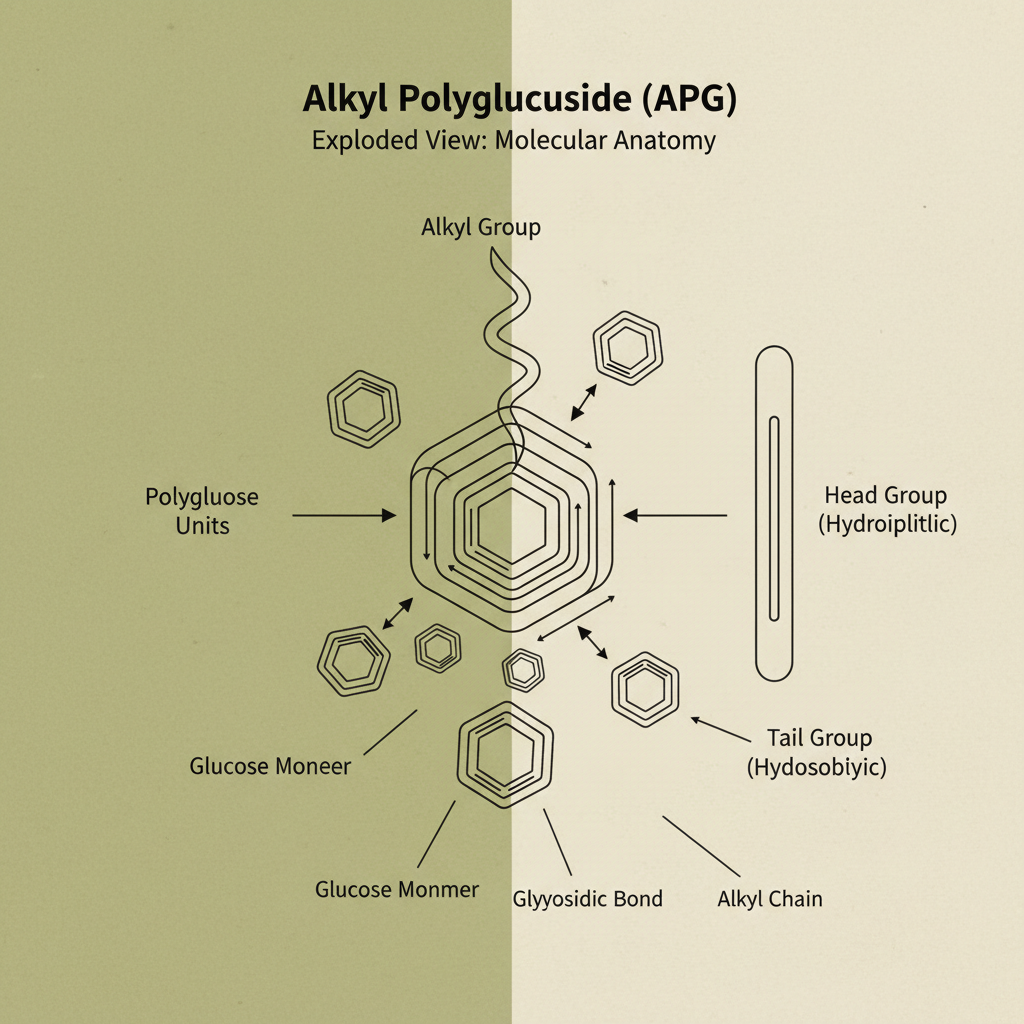
At its core, glucopon refers to a family of non-ionic surfactants known as alkyl polyglucosides (APGs). These molecules are synthesized through the Fischer glycosidation of glucose with fatty alcohols. The resulting structure consists of a hydrophilic glucose head and a hydrophobic alkyl chain, allowing it to effectively reduce surface tension and stabilize emulsions.
Unlike anionic surfactants, the non-ionic nature of glucopon makes it exceptionally mild on the skin and mucous membranes. This chemical neutrality allows it to be blended with both cationic and anionic systems without causing precipitation or loss of activity, making it a versatile "co-surfactant" in complex pharmaceutical and cosmetic formulations.
The functionality of glucopon is further defined by the degree of polymerization (DP) and the length of the alkyl chain (typically C8 to C16). By adjusting these variables, chemists can fine-tune the HLB (Hydrophilic-Lipophilic Balance) to optimize the product for either heavy-duty industrial degreasing or gentle facial cleansers.
Core Components and Performance Factors
The efficacy of glucopon is primarily governed by its biodegradability. Because the bonds are naturally occurring glycosidic linkages, microorganisms can easily break down the molecule into glucose and fatty alcohols, ensuring zero accumulation in wastewater systems.
Synergistic Scalability is another hallmark of glucopon . It enhances the performance of other surfactants, reducing the total active matter required to reach the critical micelle concentration (CMC). This leads to significant cost efficiencies in large-scale industrial production.
Finally, chemical stability across wide pH ranges (from 2 to 12) ensures that glucopon remains active in both highly acidic descalers and highly alkaline industrial cleaners, a rare trait that provides immense flexibility for formulators.
Industrial Applications and Use Cases
In the realm of Home and I&I Cleaning, glucopon is used to create streak-free glass cleaners and low-foam detergents. Its ability to emulsify oils without leaving residues makes it ideal for high-precision industrial cleaning where surface purity is paramount.
Within Cosmetic Ingredients, these glucosides act as secondary surfactants to mitigate the irritation caused by Sodium Lauryl Sulfate (SLS). In professional skincare, glucopon is utilized in "sulfate-free" shampoos and body washes, providing a rich, creamy lather while maintaining the skin's natural lipid barrier.
Performance Comparison of Glucopon Variants
Strategic Advantages and Long-Term Value
The transition to glucopon offers a dual advantage of cost-stability and brand equity. Unlike petroleum-derived surfactants that fluctuate with crude oil prices, bio-based glucosides rely on agricultural feedstocks, providing a more predictable pricing model for long-term procurement.
Furthermore, the safety profile of glucopon reduces the liability associated with hazardous chemical handling. Its non-toxic nature means lower costs for protective equipment and waste disposal, while increasing the "trust factor" with end-consumers who demand transparency in ingredient lists.
Future Innovations in Glucoside Technology
Upcoming trends in glucopon production are focusing on "Zero-Waste" synthesis. Researchers are exploring the use of enzymatic catalysis to replace traditional chemical catalysts, which would further reduce the carbon footprint of the manufacturing process and eliminate trace impurities.
Digital transformation is also playing a role, with AI-driven molecular modeling being used to design specific glucopon derivatives. By simulating the interaction between the glucose head and various substrates, companies can create custom surfactants for niche applications, such as advanced oil recovery or targeted drug delivery systems.
Additionally, we are seeing a convergence of glucopon technology with green energy. Using biomass from algae or waste cellulose instead of food-grade corn glucose is the next frontier, ensuring that the production of surfactants does not compete with global food security.
Challenges and Expert Implementation Solutions
One common challenge when implementing glucopon is its high viscosity at concentrated levels. This can lead to mixing difficulties in cold-process manufacturing. To solve this, experts recommend the use of controlled heating or the addition of hydrotropes to lower the viscosity without affecting the final performance.
Another limitation is the slower foaming rate compared to aggressive sulfates. However, this is often solved by blending glucopon with small amounts of coco-betaines. This synergistic approach creates a foam that is not only fast-forming but also more stable and significantly gentler on the skin.
Finally, managing the purity of the glucose source is critical to avoid discoloration in transparent products. Utilizing high-purity, bleached glucose and implementing precise vacuum distillation during the alkylation process ensures that the glucopon remains crystal clear, meeting the aesthetic standards of premium cosmetic brands.
Comparative Analysis of Glucopon Implementation Parameters
|
Application Type
|
Optimal Glucopon Grade
|
Solubility Score (1-10)
|
Biodegradability Index
|
| Personal Care |
Glucopon C12-C14 |
9 |
Excellent |
| Industrial Degreaser |
Glucopon C8-C10 |
10 |
Very High |
| Agrochemicals |
Glucopon Mix |
8 |
High |
| Pharmaceuticals |
Glucopon Pure |
7 |
Superior |
| Hard Surface Cleaners |
Glucopon C12-C14 |
9 |
Excellent |
| Emulsion Polymers |
Glucopon C16-18 |
6 |
High |
FAQS
Unlike sulfates, glucopon is a non-ionic surfactant derived from renewable glucose and fatty alcohols. It does not carry a charge, making it significantly less irritating to the skin and mucous membranes, while being fully biodegradable, whereas many sulfates can be harsh and have a higher aquatic toxicity profile.
Yes, one of the primary technical advantages of glucopon is its exceptional stability across a wide pH range (typically 2 to 12). This makes it an ideal choice for both industrial descalers and heavy-duty alkaline cleaners where other surfactants would decompose.
Absolutely. glucopon is a cornerstone of sulfate-free chemistry. When paired with other mild surfactants like coco-betaine or amino acid surfactants, it provides excellent cleansing and foaming properties without the need for any SLS or SLES.
To manage the high viscosity of glucopon , we recommend gentle heating (usually between 40-60°C) during the mixing phase. Alternatively, adding a small percentage of hydrotropes or using a high-shear mixer can help achieve a homogenous blend more efficiently.
For industrial degreasing, shorter chain lengths like C8-C10 are generally preferred. These variants of glucopon offer faster wetting times and superior oil emulsification properties, allowing for quicker removal of heavy greases from metal surfaces.
Yes, due to its high purity and non-toxic nature, glucopon is frequently used in pharmaceutical applications. It acts as an effective stabilizer and emulsifier that meets strict safety requirements for skin contact and systemic absorption.
Conclusion
In summary, glucopon represents more than just a chemical ingredient; it is a strategic tool for the modern manufacturer. By combining high-performance surface activity with an exemplary environmental profile, it solves the critical conflict between industrial efficacy and ecological sustainability. From the precision of pharmaceutical intermediates to the scale of industrial cleaning, the versatility of these alkyl glucosides ensures they remain indispensable in the pursuit of green chemistry.
As the industry moves toward a bio-based economy, the adoption of glucopon will likely accelerate, supported by AI-driven customization and zero-waste production methods. We encourage formulators and procurement officers to evaluate their current surfactant systems and explore the long-term cost and safety benefits of switching to glucosides. Visit our website for more technical data and sourcing options: www.hejiachemicaltech.com