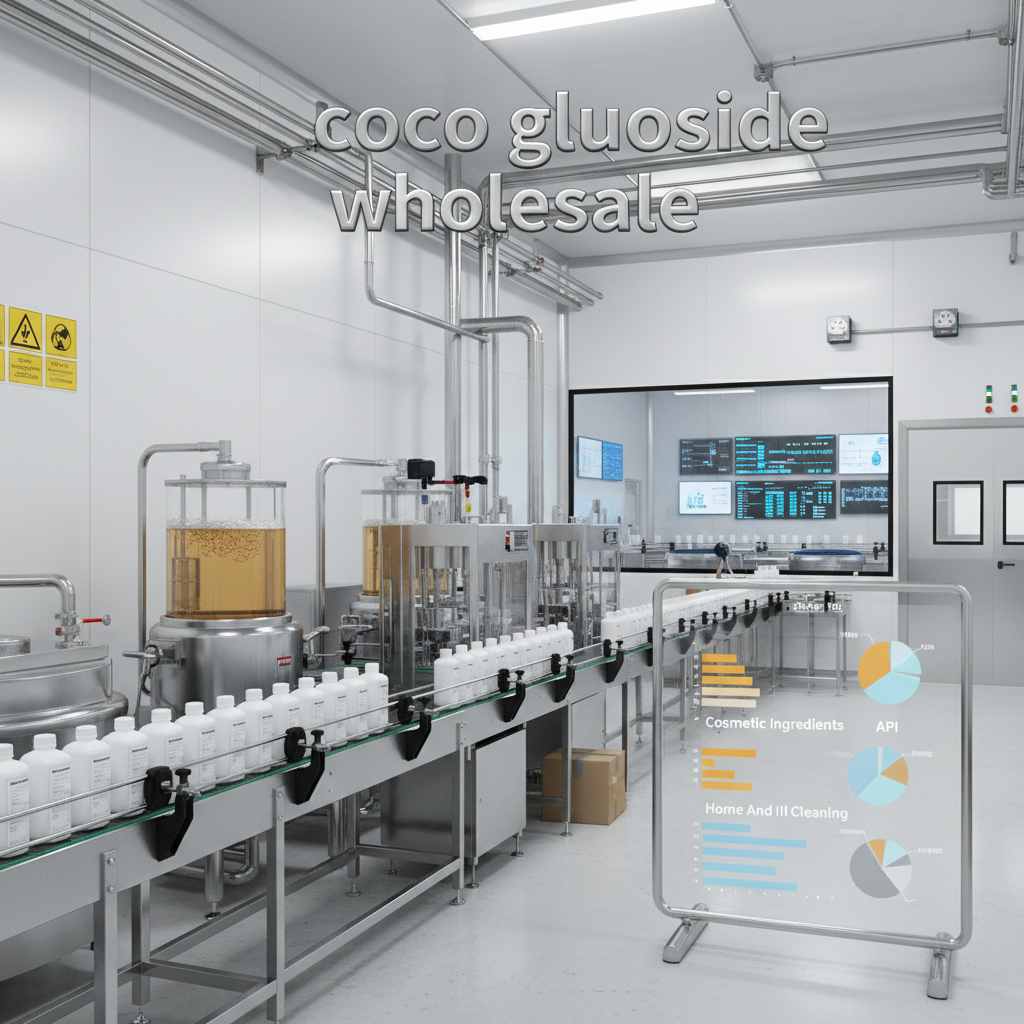
In the evolving landscape of sustainable chemistry, the demand for biodegradable and non-irritating surfactants has led to a significant surge in coco glucoside wholesale procurement. As manufacturers move away from harsh sulfates, this alkyl polyglucoside (APG) stands out as a powerhouse of gentle cleansing and eco-friendly formulation, bridging the gap between industrial efficiency and environmental stewardship.
The global shift toward "green beauty" and sustainable home care is not merely a trend but a structural change in the chemical industry. Understanding the dynamics of coco glucoside wholesale is essential for formulators who aim to balance high-performance foaming properties with a low toxicological profile, ensuring that products are safe for both the consumer and the planet.
By leveraging large-scale supply chains, businesses can integrate these versatile glucosides into diverse applications—from high-end organic cosmetics to industrial-grade cleaners. This comprehensive guide explores the technical advantages, market applications, and future trajectories of sourcing coco glucoside in bulk to maintain a competitive edge in the specialty chemicals market.
Global Market Relevance of Coco Glucoside Wholesale
The global surfactants market is undergoing a paradigm shift, with a marked transition toward bio-based alternatives. Within this context, coco glucoside wholesale has become a critical focal point for the pharmaceutical and cosmetic sectors. According to industry trends aligned with ISO environmental standards, the move toward non-ionic surfactants derived from renewable coconut oil and corn glucose is accelerating as regulatory bodies tighten restrictions on synthetic petroleum-based chemicals.
This shift addresses the primary challenge of "skin barrier disruption" caused by traditional surfactants like SLS. By opting for wholesale procurement of glucosides, manufacturers can stabilize their cost structures while meeting the increasing consumer demand for "sulfate-free" and "biodegradable" labels, ensuring that their product lines remain viable in a highly scrutinized global market.
Defining the Chemistry of Coco Glucoside
In simple terms, coco glucoside is a non-ionic surfactant produced through the reaction of a fatty alcohol (derived from coconut oil) and glucose (from corn starch). Unlike anionic surfactants, it does not carry a charge, which makes it exceptionally mild on the skin and eyes. When discussed in the context of coco glucoside wholesale, we are referring to the industrial-scale supply of this high-purity compound designed for seamless integration into large-batch manufacturing.
This chemical structure allows it to effectively reduce surface tension, enabling the emulsification of oils and the suspension of dirt, while remaining completely biodegradable. This makes it a cornerstone for modern "green chemistry," where the goal is to minimize the environmental footprint of the product throughout its entire lifecycle, from raw material extraction to wastewater degradation.
Furthermore, its compatibility with other surfactants makes it an ideal secondary surfactant. In the wholesale market, it is often sourced as a concentrated solution, allowing formulators to adjust the active matter percentage to suit specific product needs, whether it be a thin facial cleanser or a thick industrial degreaser.
Core Technical Advantages for Formulators
One of the primary drivers for coco glucoside wholesale is its unmatched skin compatibility. Because it does not penetrate the skin barrier as aggressively as sulfates, it eliminates the common "tightness" felt after cleansing, making it the gold standard for baby care and sensitive skin formulations.
From a scalability perspective, the stability of coco glucoside across a wide pH range (typically 3.0 to 11.0) allows it to be used in both acidic and alkaline environments. This versatility reduces the need for complex buffering agents in wholesale formulations, streamlining the production process and reducing overall manufacturing costs.
Moreover, its synergistic effect when paired with other surfactants enhances foam stability and viscosity. When sourced through coco glucoside wholesale channels, companies can ensure consistency in the hydrophilic-lipophilic balance (HLB), which is crucial for maintaining product shelf-life and texture across millions of units.
Industrial Applications and Use Cases
The application of coco glucoside extends far beyond simple soaps. In the cosmetics industry, it is widely used in shampoos, shower gels, and facial cleansers. In the realm of Home and I&I Cleaning, it serves as a mild yet effective detergent for hard surfaces, providing an eco-friendly alternative to harsh solvents. Many organizations in the EU and North America now mandate the use of APGs in their procurement guidelines to meet strict ESG (Environmental, Social, and Governance) targets.
In more specialized contexts, such as pharmaceutical intermediates, the purity provided by coco glucoside wholesale is utilized to create stable emulsions for topical medications. For example, in remote industrial zones where water treatment facilities may be limited, the rapid biodegradability of coco glucoside ensures that runoff from cleaning operations does not lead to long-term aquatic toxicity.
Performance Comparison of Coco Glucoside Wholesale Grade Variants
Long-Term Value and Sustainability
Investing in coco glucoside wholesale provides tangible long-term value by future-proofing brands against regulatory shifts. As governments worldwide move toward banning certain ethoxylated surfactants due to 1,4-dioxane contamination, coco glucoside offers a safe, "dioxane-free" alternative that preserves the integrity of the brand and the safety of the consumer.
Beyond the logical financial benefits of bulk purchasing, there is an emotional value rooted in trust and innovation. Consumers today feel a deep sense of dignity and safety when using products that are transparent about their origins. By utilizing sustainably sourced glucosides, companies signal a commitment to ethical sourcing and environmental preservation, which fosters long-term customer loyalty.
Future Trends in Glucoside Innovation
The future of coco glucoside wholesale is closely tied to the rise of biotechnology. We are seeing a trend toward "precision fermentation" and enzymatic synthesis, which could further reduce the energy required to produce these surfactants, making them even more sustainable and cost-effective.
Digital transformation is also playing a role. The implementation of blockchain in the chemical supply chain allows wholesale buyers to trace the coconut oil back to specific RSPO-certified (Roundtable on Sustainable Palm Oil) plantations. This ensures that the "green" claim is backed by immutable data, eliminating "greenwashing" and increasing market transparency.
Additionally, the integration of coco glucoside into advanced delivery systems—such as nano-emulsions—is opening new doors in the pharmaceutical sector. These innovations will allow for better penetration of active ingredients in medical creams, expanding the utility of the glucoside beyond simple cleansing.
Overcoming Sourcing and Integration Challenges
Despite its benefits, sourcing coco glucoside wholesale can present challenges, particularly regarding viscosity control and raw material price volatility. Because coco glucoside is often supplied as a paste or a highly viscous liquid, some manufacturers struggle with the heating and pumping requirements during the initial mixing phase.
To overcome these hurdles, expert chemists recommend the use of high-shear mixers and precise temperature controls to ensure a homogeneous blend. Furthermore, establishing long-term contracts with diversified suppliers can mitigate the risks associated with the fluctuating prices of coconut oil, ensuring a stable cost of goods sold (COGS).
Ultimately, the transition to a glucoside-based system requires a holistic approach. By combining technical optimization with a strategic wholesale partnership, companies can successfully replace traditional surfactants without sacrificing product performance.
Analysis of Coco Glucoside Wholesale Implementation Dimensions
| Metric Dimension |
Standard Grade |
Premium Grade |
Impact Score |
| Biodegradability |
High |
Ultra-High |
9.5 |
| Skin Irritation |
Very Low |
Negligible |
9.8 |
| Foam Stability |
Moderate |
High |
8.2 |
| Cost Efficiency |
Excellent |
Moderate |
7.5 |
| pH Compatibility |
3.0 - 11.0 |
3.0 - 11.0 |
10.0 |
| Sourcing Speed |
Rapid |
Scheduled |
8.0 |
FAQS
Yes, absolutely. Coco glucoside is one of the mildest non-ionic surfactants available. Because it has an extremely low irritation potential and does not strip the skin's natural lipid barrier, it is widely used in baby shampoos and washes. When sourcing in wholesale, ensure you choose a grade with high purity to minimize any residual fatty alcohols that could affect the final product's mildness.
While SLES (Sodium Laureth Sulfate) provides a denser, more voluminous foam, coco glucoside is vastly superior in terms of biodegradability and skin safety. It provides a softer, creamier foam and is non-irritating. Many formulators use coco glucoside in a wholesale blend with other mild surfactants to achieve the "best of both worlds"—high foam and high safety.
Yes, one of the biggest advantages of coco glucoside is its stability across a wide pH range. It remains effective and stable from pH 3 to pH 11. This makes it ideal for acidic skincare products, such as those containing AHAs or BHAs, where other surfactants might break down or cause instability in the emulsion.
Since wholesale coco glucoside can be quite viscous, we recommend heating the material slightly (to approximately 40-50°C) before pumping. Using a high-shear mixer during the integration phase ensures that the surfactant is evenly distributed throughout the batch, preventing "fish-eyes" or clumps in the final formulation.
Yes, coco glucoside is readily biodegradable according to OECD guidelines. Because it is derived from natural sugars and vegetable oils, microorganisms can easily break it down into harmless components, making it an ideal choice for "reef-safe" sunscreens and eco-friendly household detergents.
To ensure true sustainability, you should request certifications from your wholesaler. Look for RSPO (Roundtable on Sustainable Palm Oil) certification for the coconut-derived components and non-GMO certifications for the corn-derived glucose. This ensures that your supply chain is not contributing to deforestation or unsustainable farming practices.
Conclusion
In summary, coco glucoside wholesale represents a strategic intersection of high-performance chemistry and environmental responsibility. From its remarkable skin compatibility and pH stability to its rapid biodegradability, this surfactant provides a robust alternative to traditional synthetic cleaners, empowering manufacturers to create products that are both effective and ethical.
As the global regulatory environment continues to shift toward green chemistry, the adoption of bio-based surfactants will become a prerequisite for market entry rather than a competitive advantage. We suggest that formulators begin integrating these sustainable solutions now to optimize their production lines and build lasting trust with an increasingly conscious consumer base. For premium sourcing and technical support, visit our website: www.hejiachemicaltech.com