The escalating costs associated with drug discovery represent a significant global challenge, impacting healthcare accessibility and innovation. Understanding these costs – encompassing research and development (R&D), clinical trials, and regulatory approvals – is crucial for pharmaceutical companies, investors, policymakers, and ultimately, patients. A thorough comprehension of the factors driving drug discovery cost allows for optimized investment strategies, streamlined processes, and ultimately, the development of life-saving medications at more reasonable prices.
The industry faces increasing pressure to deliver novel therapies efficiently. The average cost to bring a new drug to market now exceeds billions of dollars, a figure that continues to rise with the complexity of modern drug targets and regulatory landscapes. This has led to a focus on innovative approaches to reduce drug discovery cost, including artificial intelligence, machine learning, and high-throughput screening technologies. Successfully navigating this terrain requires a holistic understanding of the various cost components.
Addressing the issue of drug discovery cost isn't merely an economic concern; it’s a humanitarian one. High costs can limit access to essential medications, particularly in developing countries, exacerbating health inequities. Lowering these costs, through efficiency gains and innovative funding models, can contribute to a more equitable and sustainable healthcare system worldwide.
Defining Drug Discovery Cost
Drug discovery cost encompasses all expenses incurred during the process of identifying and developing a new pharmaceutical drug. This extends far beyond simply synthesizing a molecule; it includes the initial target identification, hit discovery, lead optimization, preclinical studies (in vitro and in vivo), clinical trials (Phases I, II, and III), regulatory submissions, and post-market surveillance. It’s a lengthy, complex, and inherently risky undertaking.
The need for rigorous drug discovery is paramount in modern healthcare. The development of novel therapies is vital to address unmet medical needs, combat emerging diseases, and improve the quality of life for millions. While the cost is substantial, the potential benefits – both in terms of human health and economic impact – are immeasurable.
The Global Landscape of Drug Discovery Costs
Globally, the cost of drug discovery represents a multi-billion dollar industry. According to studies by the Tufts Center for the Study of Drug Development, the average cost to bring a new drug to market is estimated to be over $2.6 billion (adjusted for inflation), a figure that has steadily increased over the past decades. This significant investment is driven by factors such as the increasing complexity of drug targets, stringent regulatory requirements, and the high failure rate of drug candidates.
Pharmaceutical companies operating in developed countries, such as the United States and Europe, typically bear the brunt of these costs due to higher labor costs, stricter regulations, and more extensive clinical trials. However, the rise of contract research organizations (CROs) and outsourcing to countries with lower labor costs (e.g., India, China) are changing the landscape, potentially offering some cost savings. The World Health Organization (WHO) emphasizes the need for greater access to affordable medications, driving a focus on reducing the drug discovery cost.
The UN Sustainable Development Goals (SDGs), particularly Goal 3 (Good Health and Well-being), highlight the importance of access to essential medicines. High drug discovery cost poses a barrier to achieving these goals, especially in low- and middle-income countries. Innovative financing mechanisms and public-private partnerships are being explored to address this challenge.
Core Components of Drug Discovery Cost
Several key components contribute to the overall drug discovery cost. Research and development (R&D) accounts for the largest share, encompassing target identification, lead discovery, and lead optimization. This involves significant investment in laboratory equipment, personnel (scientists, researchers, technicians), and specialized software. Failure rates at this stage are high, meaning many initial investments yield no viable drug candidates.
Preclinical studies, including in vitro (test tube) and in vivo (animal) experiments, are crucial for assessing the safety and efficacy of potential drug candidates. These studies are essential for determining whether a drug is safe enough to be tested in humans and whether it shows any promise in treating the targeted disease. The cost of these studies can be substantial, particularly for complex diseases requiring extensive animal models.
Clinical trials, conducted in three phases (I, II, and III), represent the most expensive component of drug discovery cost. Phase I trials focus on safety and dosage in a small group of healthy volunteers. Phase II trials evaluate efficacy and side effects in a larger group of patients. Phase III trials involve large-scale studies to confirm efficacy, monitor side effects, and compare the new drug to existing treatments. The costs of clinical trials include patient recruitment, data collection, monitoring, and analysis.
Phases and Associated Costs
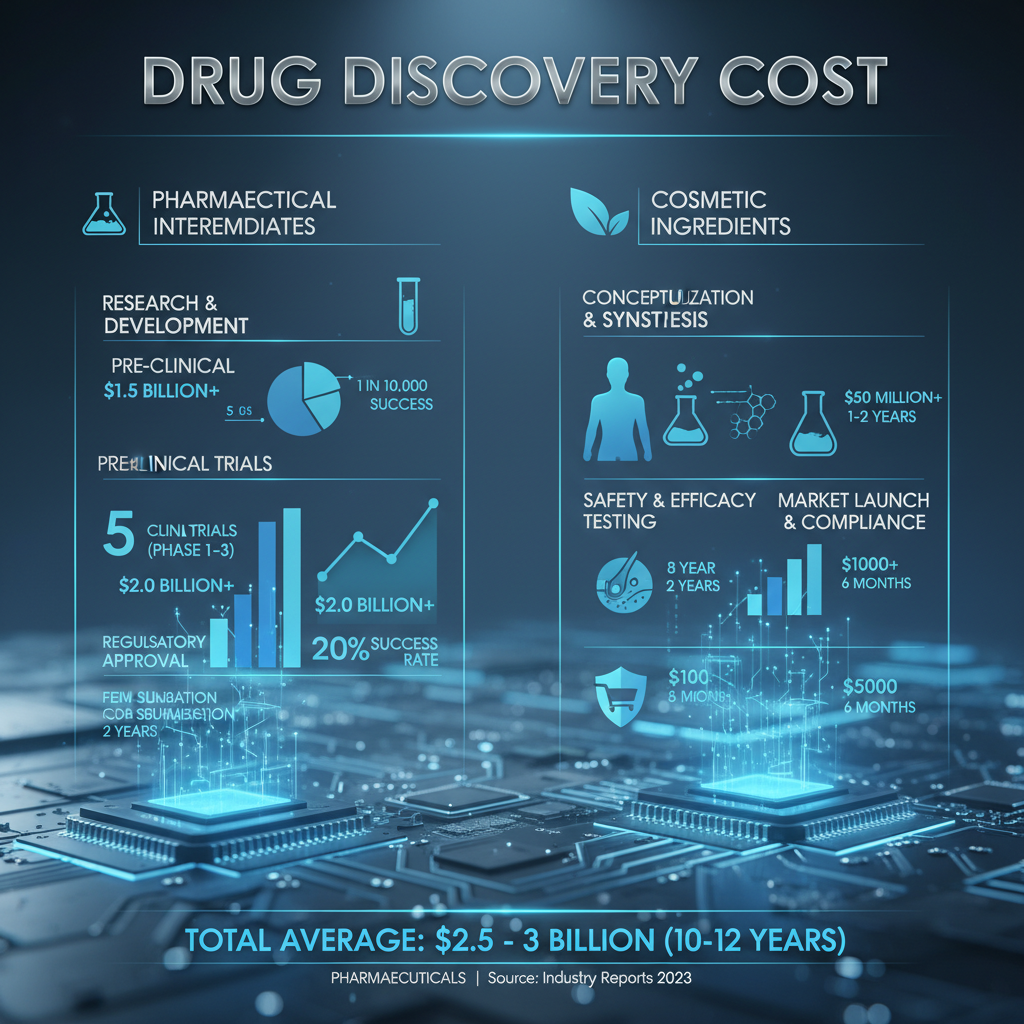
Understanding the cost breakdown across different phases of drug development is critical. Initial discovery and target validation can range from $50 million to $200 million. Preclinical studies, involving extensive laboratory work and animal testing, typically cost between $50 million and $100 million. Phase I clinical trials are relatively inexpensive, costing around $10 million to $20 million.
However, the costs escalate dramatically in later stages. Phase II trials can range from $50 million to $300 million, and Phase III trials, which involve large patient populations and multiple clinical sites, can easily exceed $500 million. Finally, regulatory submissions and post-market surveillance add further costs, potentially reaching several hundred million dollars.
Drug Discovery Cost by Phase
Global Applications & Impact on Healthcare
Reduced drug discovery cost can dramatically improve healthcare access in developing nations, where affordability is a major barrier to treatment. For example, generic drug manufacturing relies on minimizing initial development costs to offer lower-priced alternatives to branded medications. This is particularly crucial for treating prevalent diseases like HIV/AIDS, malaria, and tuberculosis.
In developed countries, lower costs can incentivize pharmaceutical companies to invest in research for rare diseases and neglected tropical diseases, which often lack commercial viability due to small patient populations. Collaborative research initiatives, fueled by reduced costs and shared resources, can accelerate the development of novel therapies for these conditions.
Advantages of Cost-Effective Drug Discovery
Cost-effective drug discovery isn't merely about financial savings; it unlocks a cascade of benefits. Increased efficiency in R&D allows for a greater volume of potential drug candidates to be explored, increasing the probability of identifying breakthrough therapies. This translates to faster innovation and improved patient outcomes.
Reduced costs also enhance sustainability within the pharmaceutical industry. By streamlining processes and minimizing waste, companies can operate more responsibly and reduce their environmental footprint. Moreover, it fosters greater trust with patients and stakeholders, as lower costs can lead to more affordable medications and improved access to healthcare.
A significant advantage of lowering drug discovery cost is the potential to redirect resources towards other critical areas of healthcare, such as preventative medicine, public health initiatives, and healthcare infrastructure.
Future Trends and Innovations in Cost Reduction
Several emerging technologies are poised to revolutionize drug discovery and significantly reduce costs. Artificial intelligence (AI) and machine learning (ML) are being used to analyze vast datasets, identify promising drug candidates, and predict clinical trial outcomes, accelerating the R&D process. High-throughput screening (HTS) technologies enable the rapid testing of thousands of compounds, increasing the efficiency of hit discovery.
Digital transformation, including the adoption of cloud computing and big data analytics, is enabling greater collaboration and data sharing among researchers, reducing redundancy and accelerating innovation. Furthermore, the growing focus on personalized medicine, driven by advances in genomics and biomarkers, promises to target therapies more effectively, reducing the need for costly and ineffective treatments.
The increasing adoption of automation and robotics in laboratories is also contributing to cost reduction by improving efficiency and reducing human error. These advancements combined represent a paradigm shift in how drugs are discovered and developed, promising a future of faster, cheaper, and more effective therapies.
Overview of Strategies for Lowering Drug Discovery Costs
| Strategy |
Implementation |
Potential Cost Savings |
Risk Factors |
| AI/ML Integration |
Implementing algorithms for target identification and prediction. |
20-30% reduction in R&D expenses. |
Data bias and algorithmic limitations. |
| Outsourcing to CROs |
Delegating preclinical and clinical trials to specialized organizations. |
15-25% cost reduction in specific phases. |
Quality control and intellectual property concerns. |
| Data Sharing & Collaboration |
Creating platforms for sharing research data among institutions. |
10-20% reduction in redundant research. |
Data security and confidentiality challenges. |
| Adaptive Clinical Trial Designs |
Employing flexible trial protocols that adjust based on interim results. |
15-20% reduction in trial duration and cost. |
Increased complexity and regulatory hurdles. |
| Virtual Screening |
Using computational methods to identify potential drug candidates. |
10-15% cost reduction in hit discovery phase. |
Accuracy of computational models. |
| Focus on Biomarkers |
Using biomarkers to identify patients most likely to respond to treatment. |
10-15% reduction in clinical trial failures. |
Biomarker validation and reliability. |
FAQS
Several factors contribute to rising costs, including the increasing complexity of diseases, the need for more sophisticated technologies, stringent regulatory requirements, and the high failure rate of drug candidates. Finding effective treatments for complex conditions like cancer and neurodegenerative diseases requires extensive research and development, driving up the overall cost. Additionally, the demand for personalized medicine, which requires targeted therapies for specific patient populations, adds further complexity and expense.
AI and machine learning can dramatically reduce costs by accelerating various stages of the drug discovery process. AI algorithms can analyze vast datasets to identify potential drug targets, predict the efficacy and safety of compounds, and optimize clinical trial designs. This leads to faster identification of promising candidates, reduced failure rates, and lower overall R&D expenses. AI can also automate repetitive tasks, freeing up researchers to focus on more complex activities.
CROs specialize in providing research services to pharmaceutical and biotechnology companies, offering expertise in areas such as preclinical studies, clinical trials, and data analysis. By outsourcing these activities to CROs, companies can reduce their overhead costs, access specialized equipment and expertise, and accelerate the drug discovery process. CROs often operate in countries with lower labor costs, further contributing to cost savings.
Meeting stringent regulatory requirements imposed by agencies like the FDA and EMA is a significant cost driver. The process of obtaining regulatory approval involves extensive documentation, clinical trials, and safety assessments. The increasing complexity of regulatory guidelines and the need for comprehensive data packages add to the overall cost and time required to bring a new drug to market.
Personalized medicine, tailoring treatments to individual patients based on their genetic makeup and other factors, can improve treatment efficacy and reduce healthcare costs. By identifying patients most likely to respond to a specific drug, personalized medicine can minimize the risk of ineffective treatments and adverse events, leading to better outcomes and reduced overall spending. However, the development of personalized therapies often requires specialized diagnostics and targeted drug development, which can initially be expensive.
Yes, several innovative financing models are emerging to address the high cost of drug discovery. These include public-private partnerships, venture philanthropy, and crowdfunding. Public-private partnerships combine the resources and expertise of government agencies, pharmaceutical companies, and academic institutions to accelerate research and development. Venture philanthropy provides funding to high-impact projects with a focus on social return on investment.
Conclusion
In conclusion, reducing drug discovery cost is a complex but essential undertaking. It requires a multifaceted approach encompassing technological innovation, streamlined regulatory processes, collaborative partnerships, and innovative financing models. By embracing these strategies, we can unlock a future where life-saving medications are more accessible and affordable for all.
Looking ahead, continued investment in AI, machine learning, and other cutting-edge technologies will be critical. Furthermore, fostering a more collaborative and open innovation ecosystem will accelerate the pace of drug discovery and reduce costs. Ultimately, lowering drug discovery cost is not merely an economic imperative; it is a moral one, with the potential to improve the health and well-being of millions worldwide. Visit our website: www.hejiachemicaltech.com