What Is the API Full Form in Pharmacy? A Practical Look
If you’ve ever dabbled in pharmaceutical manufacturing or even curiosity-driven Googling around medicinal chemistry, you’ve probably stumbled on the term API full form in pharmacy. Now, it sounds straightforward but, in my years around industrial chemical processing and pharma supply chains, this little acronym carries a lot more weight than just “Active Pharmaceutical Ingredient.” Frankly, it’s the backbone of any drug formulation worth its salt.
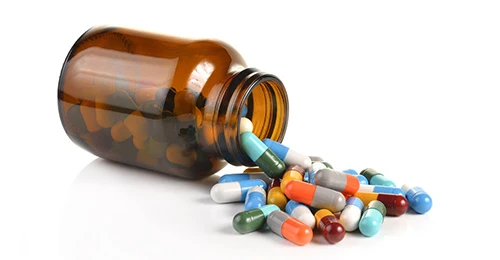
To put it simply, the API is the substance in a medication that actually produces the therapeutic effects — the “active” part — as opposed to the fillers or binders. But hearing it this way sometimes clouds the real story behind sourcing, quality control, and customization that goes unnoticed on your pharmacy shelf.
Oddly enough, when I first started in the sector, I underestimated how much care and precision go into APIs. You see, certain APIs are extremely sensitive to environmental changes, like temperature fluctuations or moisture — things you wouldn’t think about if you aren’t knee-deep in the manufacturing floor. This affects everything from raw materials sourcing to testing protocols.
Diving Into the Specifications: What Makes an API Ready for Use?
So what does a top-quality API look like? Below is a typical specification table you'd expect from a reliable supplier. It outlines physical and chemical properties that must be met for an API to pass muster:
| Specification | Requirement |
|---|---|
| Purity (%) | ≥ 98.5 |
| Moisture Content (%) | ≤ 0.5 |
| Particle Size (μm) | 10 - 50 (depends on formulation) |
| Melting Point (°C) | Specific to compound, e.g., 138-142 |
| Residual Solvents | Below regulatory limits (ppm) |
As you can tell, there are many variables to control. Even something like particle size dramatically affects how an API behaves in final products — like dissolution rate or bioavailability. I once worked with a formulation team struggling to replicate a competitor’s tablet effect until we tweaked the API’s particle size distribution. It was a subtle tweak, but it made all the difference.
Comparing Popular API Vendors: Trust and Transparency Matter
When sourcing APIs, you want a vendor who’s not just claiming compliance but actually backing it up with robust testing and consistent quality. Here’s a quick comparison of three big names in API manufacturing—you know, the sort that many pharmaceutical companies look to.
| Vendor | Quality Certification | Batch Testing Frequency | Customization Options | Lead Time |
|---|---|---|---|---|
| Hejia Chemical Tech | cGMP, ISO 9001 | 100% batch testing | Tailored particle size & purity levels | 4-6 weeks |
| Global Pharma Supplies | cGMP, FDA registered | Selective batch sampling | Standard purity grades only | 6-8 weeks |
| MedChem Raw Materials | ISO 13485 | Batch testing on demand | Limited custom options | 5-7 weeks |
You’ll notice that companies like Hejia Chemical Tech distinguish themselves with consistently rigorous testing and flexibility in customization. I personally found their approach to be aligned with the fast-paced demands of today’s pharma environment — which, frankly, can’t afford slip-ups.
In real terms, buying an API is far from just ordering a chemical. It’s a collaboration, a dance of quality control, regulatory navigation, and precision manufacturing that ultimately impacts thousands – maybe millions – of lives.
So next time you hear API in a pharmacy context, remember it’s not just a technical term. It’s a story of chemistry, craftsmanship, and care.
Feel free to explore top-grade API options and trusted suppliers—you'll be surprised how much the right partnership matters.
- FDA Guidance on APIs – fda.gov (2023)
- Pharmaceutical Dosage Forms, 2nd Ed. (K.K. Gupta, 2017)
- Industry Insights: Hejia Chemical Tech product literature (2024)