Inside the Supply Chain: Ceftezole Sodium for Modern Injectable Antibiotics
If you work in sterile injectables, you’ve likely bumped into Ceftezole Sodium sooner or later. To be honest, it’s one of those reliable, slightly understated first-generation cephalosporins that manufacturers keep in their toolkit because it just…works. Broad-spectrum coverage, stable in water, friendly to formulation teams—what’s not to like?
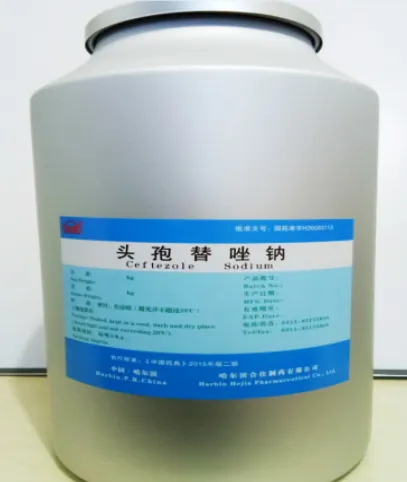
Why it’s still relevant
In clinical manufacturing, Ceftezole Sodium is valued for dependable bactericidal action via cell wall inhibition—especially against Gram-positive pathogens and select Gram-negatives. Many customers say it’s straightforward to formulate for parenteral use, with predictable dissolution and good compatibility under typical aseptic processing. In fact, hospitals still appreciate its role in respiratory, urinary tract, skin/soft tissue, and post-operative infection management—guided, of course, by local antimicrobial stewardship policies and susceptibility testing.
Industry trend check
The market’s shifting toward traceable, GMP-aligned APIs with robust data packs (DMF/CEP, if available), tighter endotoxin control, and lifecycle stability files. Real-world demand? Steady. Procurement teams ask for flexible MOQs, validated sterilization compatibility, and continuous process verification. It seems that post-pandemic, lead time resilience matters almost as much as cost.
Typical process flow (manufacturing view)
- Materials: 7-ACA core, side-chain intermediates, sodium source for salt formation, qualified solvents (ICH Q3C-compliant).
- Methods: Controlled acylation, protection/deprotection, sodium salt formation, crystallization, washing, vacuum drying, milling/sieving.
- Testing standards: Identity (IR/HPLC), assay (HPLC), impurities/related substances, water content (KF), pH, endotoxin (LAL), sterility (per pharmacopeia for sterile drug product stage), particle size where applicable.
- Service life: ≈24–36 months when stored sealed, protected from light and moisture; real-world use may vary with packaging.
- Industries: Pharmaceutical injectables, hospital compounding (where permitted), CRO/CMO development batches, academic and QC labs.
Product specifications (typical)
| Name / CAS | Ceftezole Sodium / 72558-82-8 |
| Appearance | White to off-white powder |
| Assay (HPLC) | ≥ 98.0% (anhydrous basis) ≈ typical batch data |
| Related substances | Each impurity ≤ 1.0%; total ≤ 2.0% (guide values per pharmacopeial practice) |
| Water content | ≤ 5.0% (KF) |
| pH (1% solution) | ≈ 4.5–7.0 |
| Bacterial endotoxins | ≤ 0.5 EU/mg (typical spec for parenteral-grade API) |
| Residual solvents | Complies with ICH Q3C |
| Compliance | Manufactured under GMP; aligns with pharmacopeial specifications |
Application scenarios
- Commercial injectable antibiotic manufacturing (vials or prefilled systems, where approved).
- Pilot-scale process validation and comparability runs.
- R&D screening for Gram-positive coverage, with CLSI M100-guided susceptibility testing.
Vendor comparison (snapshot)
| Vendor | Quality & Docs | MOQ / Lead Time | Notes |
|---|---|---|---|
| Hejia Chemical Tech (Origin: 80 Hainan Road, Shijiazhuang) | GMP-aligned; full QC pack; CoA, stability; DMF support on request | Flexible MOQ; lead time ≈ 2–4 weeks | Customization for particle size and packaging; responsive tech support |
| Regional Distributor | Basic CoA; varying batch traceability | Stock-dependent; 1–2 weeks if local | Convenient for small orders; limited customization |
| Aggregator Marketplace | Mixed QA; verify source GMP status | Varies widely | Good for price discovery; diligence required |
| Lab-Grade Supplier | Analytical grade; not always parenteral-grade | Fast for samples | R&D only; not suitable for GMP manufacturing |
Customization and support
With Ceftezole Sodium, buyers often request tailored particle-size distribution for rapid reconstitution, nitrogen-flushed packaging, or extended real-time stability data. Actually, even small tweaks to desiccant packs help. Hejia’s team typically supports method transfer, reference standards, and batch-to-batch comparability summaries.
Mini case notes
- Generic injectable site in Southeast Asia reduced reconstitution time by ≈18% after PSD optimization.
- Hospital-affiliated CMO reported smoother filterability and lower clog rates during aseptic fill after switching to a tighter moisture spec lot.
Certifications, testing, and data pack
Expect ISO 9001-based QMS, GMP-aligned manufacturing, ICH Q7 principles, validated HPLC assay/impurity methods, residual solvent compliance (Q3C), and microbiological controls. For antimicrobial performance, final product susceptibility testing should follow CLSI M100. Sterility and endotoxin limits conform to pharmacopeial guidance for parenterals.
References
- ICH Q7: Good Manufacturing Practice Guide for Active Pharmaceutical Ingredients. https://www.ich.org/page/q7-good-manufacturing-practice-guide-active-pharmaceutical-ingredients
- USP General Chapters (e.g., Sterility Tests; Bacterial Endotoxins Test). https://www.usp.org
- CLSI M100: Performance Standards for Antimicrobial Susceptibility Testing. https://clsi.org/standards/products/microbiology/documents/m100
- ISO 9001:2015 Quality Management Systems. https://www.iso.org/standard/62085.html
- European Pharmacopoeia and general monographs for APIs. https://www.edqm.eu/en/european-pharmacopoeia-ph-eur