In the evolving landscape of sustainable chemistry, lauryl glucoside has emerged as a pivotal non-ionic surfactant, bridging the gap between high-performance cleaning and environmental stewardship. As global regulatory bodies tighten restrictions on synthetic detergents and sulfates, the demand for bio-based alternatives has skyrocketed, placing this alkyl polyglucoside at the forefront of "green chemistry" transitions.
Understanding the chemical versatility of lauryl glucoside is essential for formulators in the cosmetic and industrial cleaning sectors. By deriving its structure from renewable plant-based sugars and fatty alcohols, it offers a biodegradable profile that satisfies both the strict ISO environmental standards and the growing consumer preference for "sulfate-free" labels.
Beyond its role as a simple foaming agent, this compound serves as a critical stabilizer and emulsifier in complex formulations. Whether it is being utilized in mild baby shampoos or high-efficiency industrial degreasers, its ability to reduce surface tension without irritating the skin makes it an indispensable asset in the modern chemical inventory.
The Chemical Composition of Lauryl Glucoside
At its molecular core, lauryl glucoside is an alkyl polyglucoside (APG) created through the reaction of a glucose source (usually corn starch) and a fatty alcohol derived from coconut or palm oil. This synthesis results in a non-ionic surfactant that possesses a hydrophilic glucose head and a hydrophobic lauryl tail, allowing it to interact effectively with both water and oil phases.
Unlike traditional anionic surfactants such as Sodium Lauryl Sulfate (SLS), this compound does not carry a charge, which significantly reduces its potential for skin irritation. This chemical neutrality allows it to be compatible with a vast array of other ingredients, including cationic polymers and various pH-sensitive additives, making it a versatile base for high-end cosmetic ingredients.
Industrial Significance and Global Demand
The global shift toward "Green Chemistry" has repositioned lauryl glucoside as a strategic raw material. With the European Union's REACH regulations and similar global initiatives pushing for the elimination of APEOs (Alkylphenol Ethoxylates), manufacturers are rapidly adopting APGs to maintain compliance while ensuring product efficacy.
Market data indicates a steady compound annual growth rate (CAGR) in the bio-surfactant sector, driven largely by the Home and I&I Cleaning industry. The ability of these glucosides to perform in hard water and maintain stability across wide temperature ranges gives them a competitive edge over legacy synthetic options.
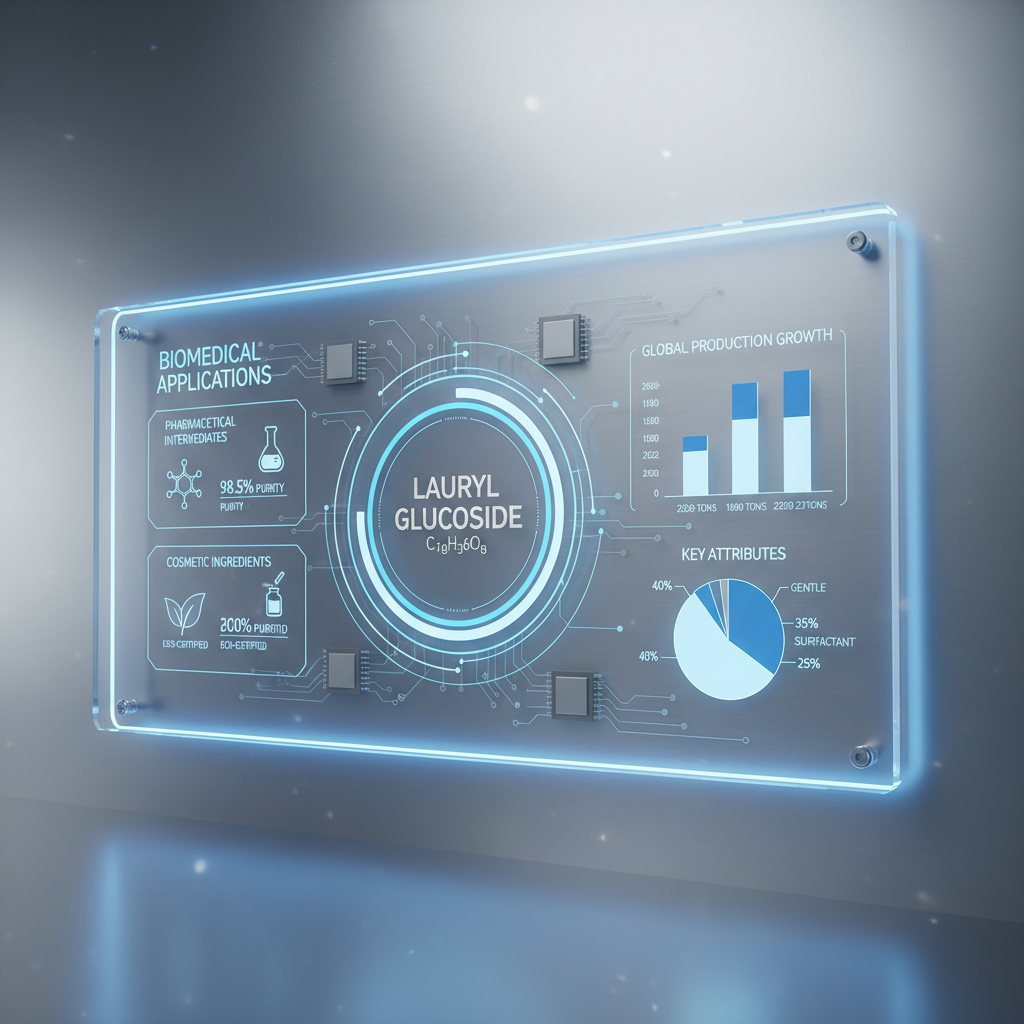
Furthermore, the integration of this ingredient into pharmaceutical intermediates and specialized medical cleansers highlights its necessity. As healthcare facilities move toward non-toxic, biodegradable sanitizers, the reliance on mild, plant-derived surfactants like this one has become a benchmark for safety and sustainability.
Key Performance Factors and Stability
When evaluating the performance of lauryl glucoside, the primary factor is its exceptional mildness. Because it does not penetrate the skin barrier as aggressively as sulfates, it is the preferred choice for "tear-free" baby products and sensitive skin formulations.
Another critical aspect is its scalability in production. The synthesis of lauryl glucoside can be optimized for large-scale industrial output without sacrificing purity, ensuring that the cost-efficiency remains viable for mass-market consumer goods.
Lastly, the chemical stability of the compound under extreme pH conditions is noteworthy. Whether in a highly acidic industrial cleaner or an alkaline soap base, it maintains its emulsifying properties, preventing phase separation and extending the shelf life of the final product.
Comparative Efficacy in Formulation
In practical application, the synergy between lauryl glucoside and other surfactants often leads to improved foaming profiles. While it may not produce the same volume of foam as traditional sulfates, its bubbles are finer and more stable, which is highly valued in luxury skin care and high-end shampoos.
From a cost-benefit perspective, the long-term value of switching to bio-based surfactants outweighs the initial formulation adjustments. The reduction in toxicity and the elimination of harsh chemicals reduce the need for expensive neutralizing agents and skin-conditioning additives.
Performance Comparison of Lauryl Glucoside Variants
Global Applications across Diversified Industries
The versatility of lauryl glucoside allows it to transcend simple soap making. In the realm of agricultural chemicals, it is used as an adjuvant to improve the wetting and penetration of pesticides on leaf surfaces, thereby reducing the amount of chemical runoff into the soil.
In the personal care sector, particularly in North America and Europe, it is a cornerstone of "clean beauty" formulations. It is frequently found in micellar waters, facial cleansers, and organic shampoos where the goal is to cleanse effectively without stripping the skin's natural lipid barrier.
Long-term Ecological and Social Value
The environmental impact of lauryl glucoside is perhaps its most significant advantage. Being 100% biodegradable, it does not persist in aquatic ecosystems, which prevents the bioaccumulation of toxins in fish and other marine life.
Beyond ecology, there is a strong social dimension to the adoption of APGs. By shifting sourcing toward sustainable coconut and corn oils, the industry supports renewable agriculture and reduces dependence on petroleum-based feedstocks, aligning industrial growth with the UN Sustainable Development Goals.
Ultimately, the transition to these mild surfactants fosters a relationship of trust between the brand and the consumer. When a company utilizes ingredients that prioritize safety and the planet, it enhances brand loyalty and ensures long-term commercial viability in an ethically conscious market.
Future Innovations in Bio-Surfactants
Looking ahead, the evolution of lauryl glucoside is linked to the rise of biotechnology and enzymatic synthesis. Researchers are exploring ways to use genetically modified microbes to produce higher purity glucosides with even lower energy requirements during the manufacturing process.
Digital transformation is also playing a role, with AI-driven formulation software now allowing chemists to predict the exact ratio of lauryl glucoside needed to achieve specific viscosity and foaming levels, reducing waste during the R&D phase.
The future will likely see the integration of this surfactant into "smart" cleaning systems—concentrated pods and waterless formulations that further reduce the carbon footprint of transportation and packaging.
Comparative Analysis of Lauryl Glucoside Implementation Strategies
| Application Sector |
Primary Benefit |
Implementation Complexity |
Eco-Score (1-10) |
| Cosmetics |
Skin Mildness |
Low |
10 |
| I&I Cleaning |
Hard Water Stability |
Medium |
9 |
| Agriculture |
Wetting Ability |
Medium |
8 |
| Pharmaceuticals |
Low Toxicity |
High |
10 |
| Industrial Degreasing |
Emulsification |
Low |
7 |
| Personal Care |
Biodegradability |
Low |
10 |
FAQS
Yes, lauryl glucoside is exceptionally mild and non-irritating, making it one of the safest surfactant choices for baby shampoos and lotions. Unlike sulfates, it does not strip the delicate skin barrier of infants, ensuring a gentle cleansing experience.
While SLS provides higher foam volume, it is often associated with skin irritation and dryness. Lauryl glucoside provides a more stable, finer foam and is significantly milder, biodegradable, and derived from renewable plant sources, offering a safer alternative for sensitive users.
Absolutely. As a non-ionic surfactant, lauryl glucoside is not affected by the minerals (like calcium and magnesium) found in hard water. This means it maintains its cleaning and foaming efficiency where traditional soaps might fail or leave a residue.
Yes, lauryl glucoside is fully biodegradable under both aerobic and anaerobic conditions. Because it is composed of simple sugars and fatty alcohols, it is easily broken down by microorganisms in nature, preventing environmental buildup.
Yes, its non-ionic nature makes it highly stable across a broad pH range. Whether you are formulating a low-pH facial wash or a high-pH industrial cleaner, lauryl glucoside remains stable and effective without decomposing.
Manufacturers should partner with specialized chemical suppliers who adhere to ISO and REACH standards. Ensuring the raw materials are sustainably sourced (RSPO certified palm oil) is also critical for maintaining the "green" integrity of the product.
Conclusion
In summary, lauryl glucoside represents the ideal convergence of technical efficacy and environmental responsibility. By offering a mild, biodegradable, and chemically stable alternative to synthetic surfactants, it enables industries to produce high-performance products that respect both the consumer's skin and the planet's health. From its role in luxury cosmetics to its application in industrial cleaning, its versatility is unmatched.
As we look toward a future defined by sustainability, the adoption of bio-based ingredients will no longer be an option but a necessity for survival in the global market. We encourage formulators and procurement managers to integrate this sustainable surfactant into their next product cycle to ensure long-term compliance and consumer trust. Visit our website for more technical specifications: www.hejiachemicaltech.com