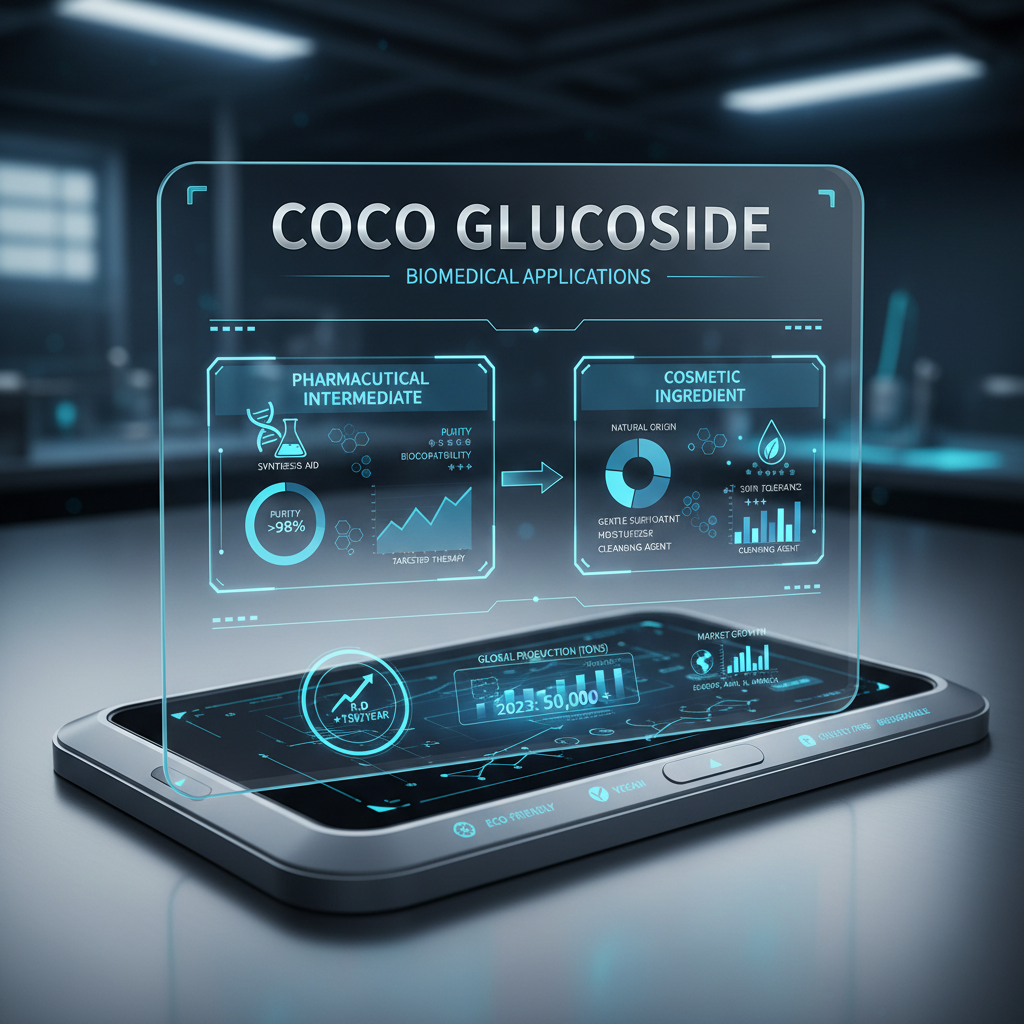
In the evolving landscape of green chemistry, coco glucoside has emerged as a cornerstone for sustainable surfactant technology. As industries shift away from harsh synthetic detergents, this non-ionic surfactant provides a biodegradable alternative that balances high-performance cleansing with exceptional dermatological compatibility. Understanding its role is essential for manufacturers aiming to align their product lines with global eco-labels and consumer demands for "clean beauty."
The global demand for coco glucoside is driven by the overarching transition toward bio-based raw materials. By leveraging the synergy between coconut oil and glucose, this compound addresses the critical need for surfactants that do not compromise the skin barrier or pollute aquatic ecosystems. Its versatility makes it indispensable across multiple sectors, from premium personal care to specialized industrial cleaning agents.
Beyond its chemical utility, the adoption of coco glucoside represents a broader commitment to the E-E-A-T principles of transparency and safety in chemical manufacturing. For formulators, mastering the integration of this alkyl polyglucoside ensures a competitive edge in a market where "natural" is no longer just a marketing buzzword but a rigorous technical requirement.
Global Industry Context of Coco Glucoside
The global surfactant market is undergoing a seismic shift as regulatory bodies like the European Chemicals Agency (ECHA) tighten restrictions on sulfates and petrochemical-based foaming agents. In this context, coco glucoside has transitioned from a niche specialty chemical to a mainstream industrial standard. Statistics from global chemical trade reports indicate a steady CAGR increase in the alkyl polyglucoside (APG) segment, reflecting a systemic move toward renewable carbon sources.
The primary challenge addressed by this shift is the environmental persistence and toxicity of traditional surfactants. Traditional linear alkylbenzene sulfonates (LAS) often struggle with full biodegradability in anaerobic conditions. By contrast, coco glucoside is derived from corn-based glucose and coconut oil, ensuring that the end-product breaks down harmlessly into the environment, thereby meeting ISO 14001 environmental management standards.
Chemical Definition and Molecular Nature
At its core, coco glucoside is a non-ionic surfactant produced through the reaction of a coconut-derived fatty alcohol with glucose. Unlike anionic surfactants, it does not carry a negative charge in aqueous solution, which is the secret behind its legendary mildness. This molecular structure allows it to emulsify oils and lift dirt without stripping the skin of its natural lipids.
From a technical perspective, the "coco" prefix refers to the chain length of the fatty alcohol, typically ranging from C12 to C14. This specific chain length is optimized for the balance between hydrophobicity (the oil-loving tail) and hydrophilicity (the sugar-loving head). This balance, known as the HLB value, is what makes the compound an exceptional wetting agent and foam stabilizer in diverse formulations.
In the broader scope of humanitarian and industrial needs, this chemistry is vital for creating "low-toxicity" hygiene products. In regions where water quality is poor or sensitive skin is prevalent, using coco glucoside ensures that cleaning products remain safe for long-term use, reducing the incidence of contact dermatitis and chemical burns associated with industrial-grade cleaners.
Core Technical Performance Factors
The efficacy of coco glucoside is primarily defined by its Dermatological Compatibility. Because it does not penetrate the stratum corneum as deeply as sulfates, it minimizes irritation. This makes it the gold standard for "tear-free" baby shampoos and sensitive skin cleansers, where safety is the non-negotiable priority.
Another critical factor is its Synergistic Scalability. When blended with other surfactants, coco glucoside often enhances the overall performance of the system, increasing foam stability and reducing the critical micelle concentration (CMC). This allows manufacturers to use lower total concentrations of active ingredients while maintaining high cleaning power.
Finally, Chemical Stability ensures that coco glucoside remains effective across a wide pH range. Whether in a slightly acidic facial wash or a neutral-pH industrial degreaser, the molecule remains stable and active, providing formulators with immense flexibility during the product development phase.
Global Applications and Use Cases
In the realm of personal care, coco glucoside is extensively used in high-end cosmetic ingredients, appearing in everything from sulfate-free shampoos to organic facial foams. In the European and North American markets, it is the preferred choice for "Clean Beauty" brands that avoid synthetic polymers and harsh salts.
Beyond cosmetics, the compound finds critical utility in Home And I&I Cleaning. For instance, in professional kitchen degreasers or eco-friendly laundry detergents, coco glucoside provides the necessary emulsification power to remove grease without leaving toxic residues on food-contact surfaces. In remote industrial zones where wastewater treatment is limited, its rapid biodegradability prevents the foaming of local river systems.
Comparative Efficiency of Coco Glucoside Variations
Long-term Value and Sustainability
The long-term value of coco glucoside lies in its ability to future-proof a brand's supply chain. As carbon taxes and plastic-reduction mandates become law, switching to a bio-based surfactant reduces the overall carbon footprint of the manufacturing process. It offers a logical transition from petrochemical dependency to a regenerative agricultural model.
From an emotional angle, the use of this ingredient builds trust with the modern consumer. The "dignity of safety"—knowing that a product is gentle enough for a newborn yet powerful enough for industrial cleaning—creates a powerful bond of reliability. Innovation in this space isn't just about chemistry; it's about the social impact of reducing chemical pollution in our global waterways.
Future Innovations in Glucoside Chemistry
The next frontier for coco glucoside involves the integration of "green" catalysis. Researchers are exploring enzymatic synthesis pathways that can produce these glucosides at lower temperatures and pressures, further reducing the energy intensity of production and minimizing byproduct waste.
Digital transformation is also playing a role. AI-driven formulation software is now being used to predict the exact ratio of coco glucoside to other co-surfactants to achieve "perfect foam" profiles. This reduces the trial-and-error phase of R&D, accelerating the time-to-market for sustainable cleaning products.
Furthermore, the industry is moving toward "Circular Glucosides," where the glucose source is derived from agricultural waste (such as corn stover or wheat straw) rather than food-grade corn. This ensures that the production of coco glucoside does not compete with food security, fulfilling the highest standards of ethical sourcing.
Overcoming Implementation Challenges
Despite its advantages, coco glucoside presents certain formulation challenges, most notably its high viscosity in concentrated forms. This can make pumping and mixing difficult in large-scale industrial settings. However, expert insight suggests that the use of temperature-controlled blending and the addition of specific hydrotropes can effectively manage the viscosity without compromising the eco-profile.
Another common hurdle is the "flash foam" profile; glucosides sometimes produce a denser, smaller-bubbled foam compared to the voluminous lather of sulfates. Formulators can overcome this by creating synergistic blends with other APGs or amino acid-based surfactants, achieving a luxurious sensory experience that satisfies consumer expectations while remaining non-toxic.
Cost efficiency remains a talking point, as bio-based materials can be more expensive than crude-oil derivatives. However, when calculating the "Total Cost of Ownership"—including reduced regulatory compliance costs, lower hazardous waste disposal fees, and the ability to command a premium price for "green" products—coco glucoside proves to be the more economically viable long-term investment.
Technical Analysis of Coco Glucoside Implementation Strategies
|
Challenge Factor
|
Impact Level (1-10)
|
Optimized Solution
|
Expected Outcome
|
|
High Viscosity
|
8
|
Heated Mixing (40-60°C)
|
Improved Flowability
|
|
Foam Volume
|
6
|
Synergistic APG Blends
|
Rich, Stable Lather
|
|
Raw Material Cost
|
7
|
Bulk Sourcing & Concentrates
|
Reduced Unit Cost
|
|
Skin Compatibility
|
2
|
pH Adjustment to 5.5
|
Zero Irritation Profile
|
|
Water Solubility
|
5
|
Sequential Addition
|
Homogeneous Solution
|
|
Biodegradability
|
1
|
Standard Process
|
100% Eco-Compliant
|
FAQS
Yes, coco glucoside is fully biodegradable under both aerobic and anaerobic conditions. Unlike many synthetic sulfates that can leave residual metabolites in the water table, glucosides break down into simple sugars and fatty alcohols, which are naturally consumed by microorganisms, making them significantly safer for aquatic life.
Absolutely. One of the primary technical advantages of coco glucoside is its exceptional stability across a broad pH spectrum. While many surfactants degrade or lose efficacy in alkaline environments, this non-ionic compound remains stable, making it ideal for both mild skincare and heavy-duty industrial cleaners.
On the contrary, it is specifically chosen for sensitive skin. Because it does not interact aggressively with the skin's lipid bilayer, coco glucoside is non-irritating and non-sensitizing. It is widely used in hypoallergenic products and baby care items precisely because of its gentle nature.
The most effective way to manage the viscosity of coco glucoside is through controlled heating. Gently heating the raw material to approximately 40-60°C significantly reduces its thickness, allowing for easier pumping and a more homogeneous blend with other ingredients in your formulation.
Yes, provided the coconut oil and glucose sources are sustainably and organically sourced. Since coco glucoside is derived from renewable vegetable sources and avoids petroleum-based chemistry, it is compatible with most major organic and "natural" certification standards worldwide.
It may change the foam quality. You will notice a creamier, denser foam rather than the large, airy bubbles of SLS. However, you can easily optimize this by blending coco glucoside with other mild surfactants like cocamidopropyl betaine to achieve a balanced, luxurious lather that consumers love.
Conclusion
In summary, coco glucoside represents the ideal intersection of high-performance chemistry and environmental stewardship. By offering a biodegradable, non-irritating, and chemically stable alternative to synthetic surfactants, it enables manufacturers to create products that are safe for the consumer and the planet. From its role in premium cosmetics to its utility in industrial cleaning, the versatility of this compound is unmatched in the current green chemistry market.
Looking forward, the continued innovation in bio-catalysis and circular sourcing will only further enhance the value proposition of coco glucoside. For businesses seeking to lead the transition toward sustainability, integrating this surfactant is not merely a technical upgrade but a strategic commitment to a cleaner, safer future. We invite you to explore how these sustainable solutions can transform your product line. Visit our website: www.hejiachemicaltech.com