The global shift toward sustainable chemistry has forced a critical re-evaluation of how cosmetic ingredient manufacturers approach the synthesis of surfactants and active intermediates. As consumer demand for "green" beauty increases, the industry is moving away from traditional petroleum-based derivatives toward biodegradable and bio-based alternatives that maintain high performance without ecological compromise.
This transition presents a significant engineering challenge: achieving the precise balance between biodegradability and functional efficacy. For formulators, the difficulty lies in replacing synthetic agents with bio-surfactants while maintaining the same emulsion stability, skin-feel, and shelf-life. The gap between lab-scale innovation and industrial-scale stability remains a primary bottleneck for many high-tech chemical producers.
This analysis examines the current technical landscape of raw material sourcing and the integration of biodegradable alternatives in personal care. We will explore how the adoption of advanced chemical intermediates can solve these formulation hurdles, providing a roadmap for those seeking high-purity solutions from experienced cosmetic ingredient manufacturers.


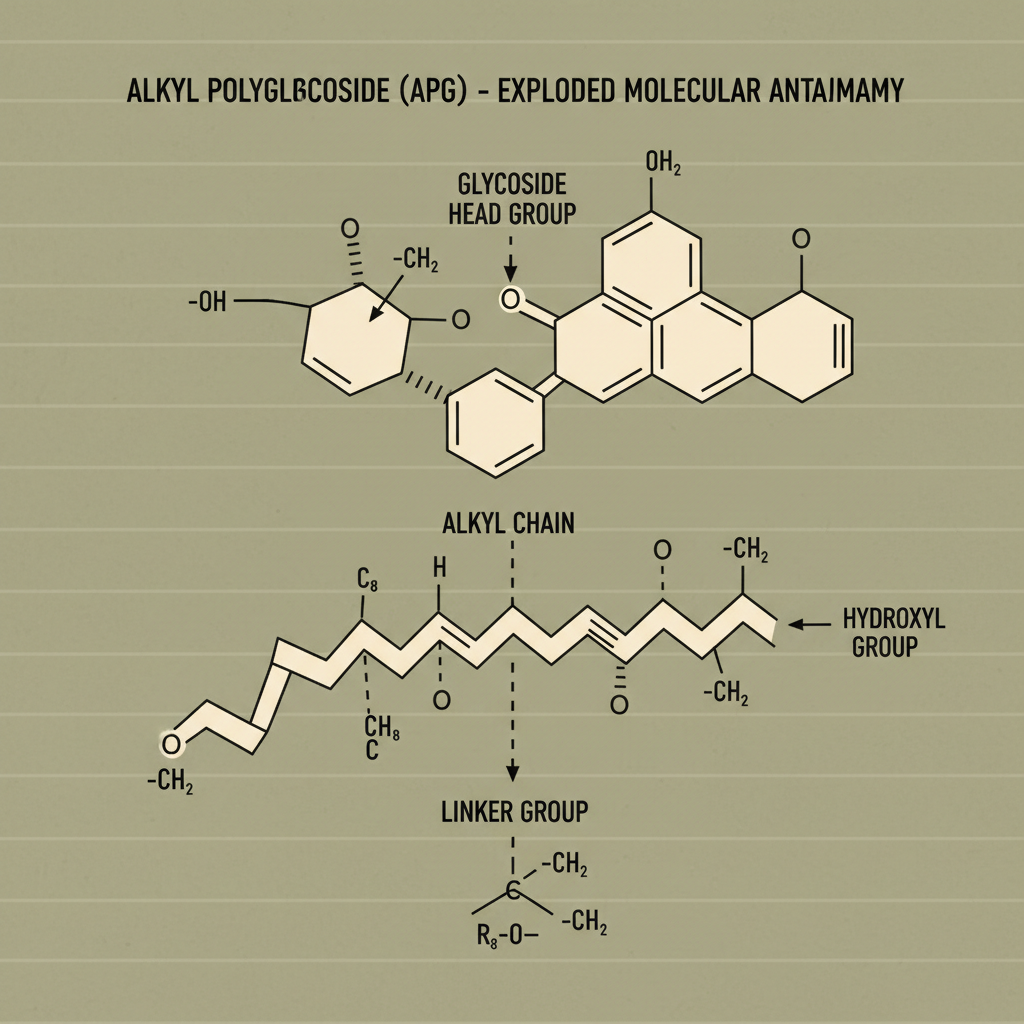
The core mechanism of modern green surfactants, such as Alkyl Polyglucosides (APG), involves the synthesis of glucose from corn or wheat with fatty alcohols from coconut or palm oil. Unlike traditional sulfates, these molecules provide a non-ionic structure that is exceptionally mild on the skin and fully biodegradable.
From an engineering perspective, the synthesis requires precise control over the polymerization degree to ensure consistent viscosity and foaming properties. This structural integrity is what allows cosmetic ingredient manufacturers to offer raw materials that are both environmentally benign and industrially viable.
In the production of fine chemical intermediates like the Triazine Ring or AE Active Ester, purity is not merely a quality metric but a functional requirement. Trace impurities in these building blocks can trigger unwanted side reactions during the final formulation stage, leading to discoloration or reduced stability of the cosmetic end-product.
High-purity intermediates ensure that the molecular docking of active ingredients occurs with maximum efficiency. For example, reducing residual catalyst levels in pharmaceutical-grade intermediates minimizes the risk of skin irritation, making them suitable for high-end dermatological applications.
Consequently, the technical capacity of the manufacturer to implement stringent quality controls—such as ISO 9001 and advanced testing systems—determines the reliability of the entire supply chain. This is why professional buyers prioritize manufacturers with vertically integrated industrial chains.
One of the most persistent challenges in green chemistry is the inherent instability of biodegradable molecules when exposed to extreme pH levels or temperature fluctuations. Bio-surfactants often lack the robust chemical resistance of their synthetic predecessors, which can lead to phase separation in complex emulsions.
The integration of fully biodegradable surfactants, such as APG, represents a breakthrough in this area. By leveraging a sugar-based head group, these ingredients provide superior surface tension reduction and skin compatibility, effectively bridging the gap between ecological safety and industrial performance.
When evaluating the efficacy of various cosmetic raw materials, engineers often use a normalized scoring system to compare performance across different dimensions. This allows for an objective analysis of how bio-based ingredients stack up against synthetic benchmarks in terms of skin compatibility and environmental impact.
The following data illustrates the relative engineering assessment of common surfactant categories used by cosmetic ingredient manufacturers, focusing on the balance between cleaning power and skin mildness.
In a typical deployment scenario for high-end skincare, bio-based surfactants like Coco-Glucoside are integrated into facial cleansers to minimize protein denaturation on the skin barrier. This requires the manufacturer to provide ingredients with a very tight pH range and low salt content to prevent destabilizing the organic actives in the formula.
For industrial-scale shampoo production, the focus shifts to viscosity control. Engineers often blend different chain-length glucosides (e.g., Decyl vs. Caprylyl) to achieve the desired thickness and foam density without relying on synthetic thickeners. This approach allows brands to claim "sulfate-free" status while maintaining the sensory experience consumers expect.
The next frontier for cosmetic ingredient manufacturers is the development of "precision surfactants"—molecules designed through computer modeling to interact with specific skin lipid layers. This movement toward personalized chemistry aims to maximize the delivery of active pharmaceutical ingredients (APIs) through the skin barrier.
Furthermore, there is a growing emphasis on circular economy principles, where raw materials are sourced from agricultural waste rather than virgin crops. The challenge here is removing complex impurities from waste streams to reach the high-purity grades required for cosmetic applications.
We anticipate an increase in the use of biotechnological fermentation processes to create specialty esters and lipids. These "lab-grown" ingredients offer a more consistent quality profile than traditionally extracted plant oils, reducing batch-to-batch variation for large-scale formulators.
Selecting the right raw material involves weighing technical specifications against the final product's target profile. Not all green ingredients are interchangeable; for instance, a surfactant optimized for a rinse-off product may be too irritating for a leave-on cream.
The table below provides an evaluation framework for choosing between different bio-surfactant configurations based on common industrial requirements.
This matrix serves as a decision-support tool for procurement managers to align their material selection with both regulatory constraints and performance goals.
| Configuration Type | Primary Attribute | Biodegradability | Recommended Use Case |
|---|---|---|---|
| Basic Glucoside | High Foaming | Excellent | Daily Body Wash |
| Standard APG Blend | Balanced HLB | High | Facial Cleansers |
| Precision High-Purity | Ultra-Mild | Excellent | Dermatological Care |
| High-Viscosity Profile | Thickening Effect | High | Sulfate-Free Shampoo |
| Low-Irritation Grade | Barrier Protection | Excellent | Baby Care Products |
| Industry Baseline | Cost-Efficiency | Moderate | Mass Market Soap |
Alkyl Polyglucosides (APG) are non-ionic surfactants derived from renewable sugars and fatty alcohols, offering superior skin mildness and complete biodegradability. Sodium Laureth Sulfate (SLES), while an efficient cleanser and foaming agent, is an anionic surfactant that can be more irritating to the skin barrier and has a different ecological footprint. From an engineering standpoint, APGs provide better stability across a wider pH range but may require blending to match the high-flash foam of SLES.
Impurities in intermediates, such as residual solvents or catalyst traces, can act as destabilizers in an emulsion. They may interfere with the surfactant's ability to form a stable micelle, leading to phase separation or "creaming" over time. Furthermore, high-purity intermediates prevent unwanted chemical reactions that can alter the color or scent of the final product, ensuring that the active ingredients remain potent and safe for skin application.
Stability depends on the molecular structure and the presence of stabilizing co-ingredients. While some bio-surfactants are more heat-sensitive than synthetics, the use of specific chain-length configurations and the addition of natural antioxidants can significantly improve thermal stability. Engineers typically conduct accelerated aging tests (at 40°C or 45°C) to determine the shelf-life and ensure that the biodegradable components do not break down prematurely.
Buyers should prioritize three main factors: certification, vertical integration, and technical support. ISO 9001 and 14001 certifications ensure quality and environmental management. Vertical integration (controlling the process from raw material to final intermediate) reduces supply chain risks and ensures consistent purity. Finally, a manufacturer's ability to provide technical data sheets (TDS) and application guidance is critical for optimizing the formulation process.
Verification usually involves a combination of biodegradability tests (such as OECD 301B), carbon footprint analysis, and certifications like COSMOS or ECOCERT. These standards evaluate the percentage of naturally derived carbon and ensure that the manufacturing process avoids harmful solvents and minimizes energy consumption. Manufacturers provide certificates of analysis (CoA) to prove that the ingredients meet these ecological and purity benchmarks.
Generally, yes, and often they are more compatible because their non-ionic nature reduces the likelihood of electrostatic interactions with the API. This can improve the solubility and penetration of the active ingredient into the skin. However, compatibility must be verified through stability testing to ensure that the surfactant does not catalyze the degradation of the API or interfere with its biological activity.
The transition toward bio-based chemistry is no longer an optional trend but a technical necessity for the modern beauty industry. The evidence suggests that while the shift from synthetic to biodegradable ingredients introduces complexities in stability and viscosity, these can be solved through precise molecular engineering and the use of high-purity intermediates.
For brands and formulators, the practical implication is a shift toward partnering with cosmetic ingredient manufacturers who can provide both the raw materials and the technical data required to optimize a green formula. By focusing on the synergy between purity, biodegradability, and functional performance, the industry can achieve a truly sustainable future without sacrificing product quality.