What Manufacturers Really Mean by Cefoperazone Molecular Weight
In plant meetings and QC chat threads, I keep hearing the same question: what’s the “real” number for Cefoperazone Molecular Weight? Here’s the practical answer teams use on the floor. The free acid form of cefoperazone clocks in at ≈645.6 g/mol (commonly cited), while the sodium form used in finished drug substance is ≈667.7 g/mol. Context matters—spec sheets often list both, which, to be honest, avoids a lot of confusion when converting dosages or setting up HPLC methods.
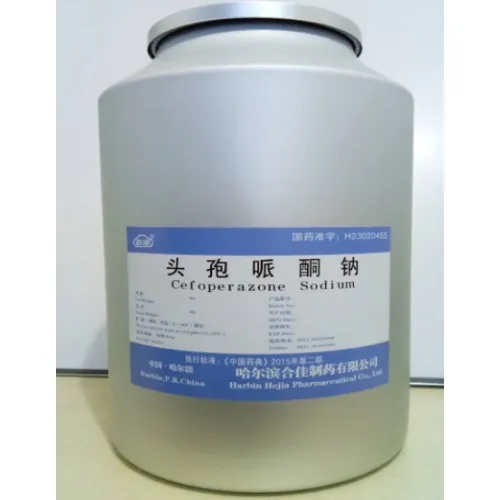
Product at a Glance: Cefoperazone Acid (CAS 58739-66-5)
Origin: 80 Hainan Road, Shijiazhuang Economic and Technological Development Area. This Cefoperazone Acid is a core intermediate for third‑generation cephalosporins with strong anti‑pseudomonal relevance. It’s primarily converted to Cefoperazone Sodium for severe infection treatments. In my notebook, I’ve circled one thing repeatedly: consistent pharmacopoeia compliance (USP/EP/ChP) is what keeps batch release drama-free.
Key Specifications and Typical Data
| Item | Spec / Result (≈; real-world use may vary) |
| Identity | IR/NMR conforms; LC-MS m/z consistent with free acid |
| Cefoperazone Molecular Weight | Free acid ≈645.6 g/mol; Sodium form ≈667.7 g/mol |
| Assay (HPLC) | ≥98.0% (dry basis) |
| Related substances | Any single ≤0.5%; total ≤1.0% (USP/EP aligned) |
| Water (KF) | ≤1.0% |
| Residual solvents | Meets ICH Q3C limits (GC) |
| Heavy metals | ICP-MS: meets pharmacopeial limits |
| Shelf life | 24–36 months sealed, 2–8°C, desiccated, light-protected |
Process Flow (What QC actually checks)
Materials: protected cephem nucleus, acylating reagents, controlled base, pharma-grade solvents. Methods: stepwise acylation → deprotection → crystallization → washing → vacuum dry. Testing standards: USP/EP/ChP monographs; in-process HPLC for impurity drift; endpoint confirmation by LC-MS; compendial water and solvent tests. Service life: validated stability under ICH Q1A; re-test possible with trending data (I’ve seen it extended when lots behave well).
Applications and Industries
-
- API manufacturing: conversion to Cefoperazone Sodium for hospital injectables.
- Contract development: method transfer, impurity mapping, reference standard bridging.
- Regulatory filings: DMF/CEP support packages, stability summaries, validation batches.
Vendor Comparison (field-notes style)
| Vendor | Compliance | Batch Size | Lead Time | Notes |
| Hejia Chemical Tech (Hainan Rd, Shijiazhuang) | USP/EP/ChP, ISO 9001; DMF-ready dossier | Up to 50–100 kg | 2–4 weeks | Strong impurity control; responsive QC |
| Supplier B | USP/EP | 10–30 kg | 4–6 weeks | Good price; limited stability data |
| Supplier C | ChP | ≤20 kg | 6–8 weeks | Customization on request |
Customization and Documentation
Options: particle size tuning for filtration, impurity profile tightening (e.g., ≤0.3% total), tailored residual solvent targets. Docs: CoA, MOA, MSDS, stability summary, validation package (HPLC/GC KF), and, if needed, CEP support. Customers say the fastest wins happen when method parameters (column, gradient, λ) are shared early.
Case Snapshots
- EU CDMO: cut rejections from 3% to 0.5% after aligning on Cefoperazone Molecular Weight reference, ion pairing, and column lot.
- India sterile site: moved to 100 kg/quarter after solvent switch reduced unknown impurity at RRT 1.12 from 0.45% to 0.18%.
Certifications and Standards
Plant quality: ISO 9001, GMP-aligned operations; testing against USP/EP/ChP. ICH Q7/Q3A/Q3C frameworks applied. Antimicrobial relevance usually cross-checked with CLSI M100 breakpoints during downstream API work (not for the intermediate, but teams like the line-of-sight).
Authoritative citations
- USP–NF Monograph: Cefoperazone and Cefoperazone Sodium.
- European Pharmacopoeia (Ph. Eur.) monographs for cephalosporins.
- PubChem Compound Summary: Cefoperazone (molecular weight and identifiers).
- ICH Q7, Q3A, Q3C guidelines for API/intermediate control.
- CLSI M100 Performance Standards for Antimicrobial Susceptibility Testing.